The best walking challenge app depends on who is taking part. Fitcoin is best when friends want steps, full workouts, rewards and ongoing competition. StepUp is excellent for a large, simple step leaderboard. Stridekick handles mixed wearable groups. Steps Club is more social than competitive. StepBet adds a real financial stake. MoveSpring is designed for employers rather than a group chat.
Best overall for rewards and mixed activity: Fitcoin. Best free large-group leaderboard: StepUp. Best for mixed trackers: Stridekick. Best private social feel: Steps Club. Best with money at risk: StepBet. Best for workplaces: MoveSpring.
Disclosure: Fitcoin is our product, and it appears first because it matches the combined rewards, competition and workout brief. The other apps may be better for a pure step contest, a corporate programme or a challenge that uses cash stakes. Features and free limits change, so check the live plan before inviting everyone.
Walking challenge apps compared
| App | Best for | Challenge style | Main catch |
|---|---|---|---|
| Fitcoin | Friends who walk and train | FitScore, steps, challenges and Rankings | Not a custom corporate dashboard |
| StepUp | Large free groups | Shared step leaderboard | Steps only and ad-supported |
| Stridekick | Mixed wearable groups | Cross-device step and distance challenges | Some group features may require payment |
| Pacer | Walking plans and community | Goals, groups and structured challenges | Premium prompts and busy interface |
| StepBet | Financial accountability | Personal goals with a paid stake | Miss goals and lose money |
| Steps Club | Close friends and families | Private social walking clubs | Less focused on winning |
| MoveSpring | Employer programmes | Admin-run wellness campaigns | Business product, not a casual free app |
1. Fitcoin: best for rewards and more than steps
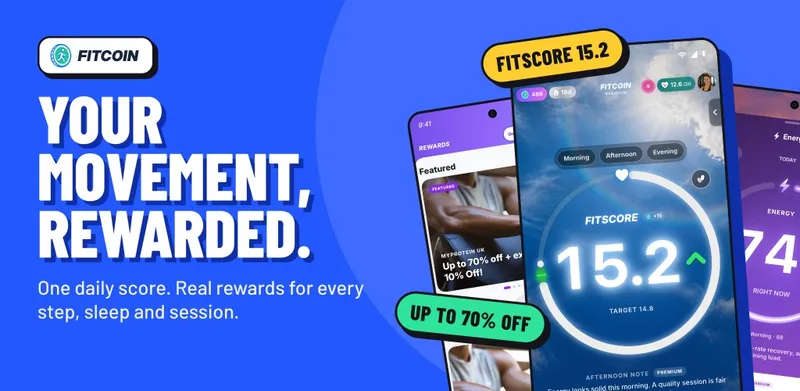
Most step challenge apps treat every participant as a number on a pedometer. Fitcoin adds a broader score. Compatible steps and recorded workouts contribute to FitScore, so a runner, gym-goer and walker can compare consistent activity without pretending that only steps count.
Friends can switch between FitScore and step Rankings across today, seven days and 30 days. Weekly global Rankings use ten tiers with promotion and demotion, while Leagues let communities organise around a shared identity. Challenges, streaks and achievements create reasons to keep returning after one contest ends.
Fitcoin also provides partner rewards without requiring participants to stake money. It is the strongest choice for an ongoing fitness group, but an employer needing formal reporting should use a dedicated corporate platform.
2. StepUp: best simple free leaderboard
StepUp does one thing clearly: it puts friends, family or colleagues on a shared step leaderboard. Its current site says groups can hold up to 1,500 people for free, making it unusually practical for a school, informal workplace contest or a large community.
The trade-off is scope. The experience is built around steps, not gym workouts or a wider reward system, and the free model includes advertising. Choose it when the contest needs to be easy to explain: most steps wins.
3. Stridekick: best for mixed wearables
A group challenge becomes awkward when one person owns an Apple Watch, another uses Fitbit and somebody else carries only an Android phone. Stridekick is designed around cross-device compatibility, making it a practical bridge for varied hardware.
It supports group step, distance and activity challenges with social interaction. Check the current participant limits and paid features before organising a large event. Stridekick is strongest when device fairness matters more than rewards.
4. Pacer: best for guided walking and community
Pacer combines a mature pedometer with goals, walking plans, GPS activity, groups and community challenges. It works well for someone who wants structure around the competition rather than a bare leaderboard.
The app has accumulated many features, so it can feel busier than a dedicated challenge tool. Some plans and insights sit behind premium access. Choose Pacer when guided walking and an established community matter more than a minimal interface.
5. StepBet: best when money creates accountability
StepBet calculates personalised active and power-day targets, then asks players to buy into a multi-week game. Complete every required week and you recover your stake plus a share of forfeited money. Fail the targets and you can lose the entry fee.
This is powerful accountability, but it is not a free reward. Injury, travel or tracker trouble can turn a challenge into a loss. Use it only with money you can afford to lose, and read our detailed StepBet review before joining.
6. Steps Club: best for a private social group
Steps Club positions walking as a shared social activity rather than a race. Private clubs show friends walking, let members react to progress and centre individual goals. That makes it a better fit for couples, families or close friends who dislike public leaderboards.
It is not the strongest choice for a highly competitive tournament. Choose it when connection matters more than finishing first, and check the current free club and friend limits.
7. MoveSpring: best for organised workplace challenges
MoveSpring is built for companies and wellness providers. Administrators can run campaigns, communicate with participants and manage a wider programme instead of relying on one employee to maintain a group chat and spreadsheet.
That extra administration is exactly why it is excessive for five friends. Use MoveSpring when an employer needs a supported programme, reporting and formal rollout. Use StepUp or Fitcoin for an informal office competition.
How to choose the right step challenge app
- Decide what counts: steps only, distance, FitScore or recorded workouts.
- Check every device: confirm iPhone, Android and wearable support before sending invites.
- Choose the competition style: winner-takes-all, personal goals, teams, tiers or a social club.
- Set the duration: seven to 14 days is easier for a first contest than an endless leaderboard.
- Protect beginners: use improvement, consistency or tiered goals so one marathon runner does not settle the result on day one.
- Make rewards fair: recognise most improved, best streak or everyone who completes the target, not only first place.
- Agree on syncing: tell participants when data must be synced and what happens if a tracker fails.
Five walking challenge ideas that stay fair
- Seven-day total: simple, fast and easy to understand.
- Consistency week: hit a personal minimum on five of seven days.
- Most improved: compare each person's result with their own previous week.
- Team average: use average steps so larger teams do not automatically win.
- Mixed activity: use FitScore when some people walk while others run, cycle or train indoors.
Final verdict
Fitcoin is the best all-round choice when a friend group wants walking, workouts, rewards and a competition that continues after one week. StepUp is the cleaner option for a big free step leaderboard. Stridekick solves mixed-device friction. Steps Club suits supportive private groups. StepBet suits people who deliberately want financial pressure. MoveSpring is for formal workplace programmes.
For broader competition beyond walking, see our guide to the best fitness apps to compete with friends and the platform roundup of social fitness challenge apps. For reward-first options, compare the best step counter apps that pay. Running a challenge at work? We cover admin dashboards, pricing and free options separately in the best corporate step challenge apps.
Features and plan limits were checked against available product information on July 26, 2026. Confirm current pricing, group limits and device support before starting a challenge.