CashWalk has been around since 2019 and is one of the most downloaded "get paid to walk" apps in the US and UK. The pitch is simple: walk, collect Stepcoins, trade them for gift cards. So how does Fitcoin compare? It comes down to what gets rewarded, how fast the rewards actually arrive, and how many ads you're willing to sit through along the way.
CashWalk rewards one thing: steps, capped at 10,000 a day. If you train in the gym, run, cycle, or do anything that isn't walking with your phone in your pocket, that effort earns you nothing. And the steps that do count only become coins when you open the app and tap the treasure box, usually with an ad attached.
This guide compares both apps honestly: how they track, what the rewards are actually worth, and which type of person each app suits best.
Side-by-Side Comparison
| Feature | Fitcoin | CashWalk |
|---|---|---|
| Tracked Activities | Steps, running, lifting, cycling, yoga, HIIT | Steps only, capped at 10,000/day |
| Primary Rewards | Curated brand discounts & free items | Small gift cards (~$5 per 5,000 coins) |
| Banking Your Steps | Automatic background syncing | Manual treasure box tap, ads on open |
| Social Features | Leagues, leaderboards, stories, comments | Solo experience, lucky boxes & scratchers |
| Sleep / Recovery / Energy | Built-in Sleep, Recovery & Energy + coaching | Not a core product pillar |
| Best For | Active people who train beyond walking | Casual walkers collecting slow gift cards |
1. Tracking: A Capped Pedometer vs. Your Whole Fitness Life
CashWalk is a pedometer with a lockscreen widget. It counts steps from your phone's motion sensors and pays 1 Stepcoin per 100 steps, but only up to 100 coins a day. Walk 15,000 steps and the last 5,000 earn nothing. Do a 45-minute weights session, a spin class, or a swim and the app sees none of it. Some users also report step counts drifting well below what their phone's own health app records.
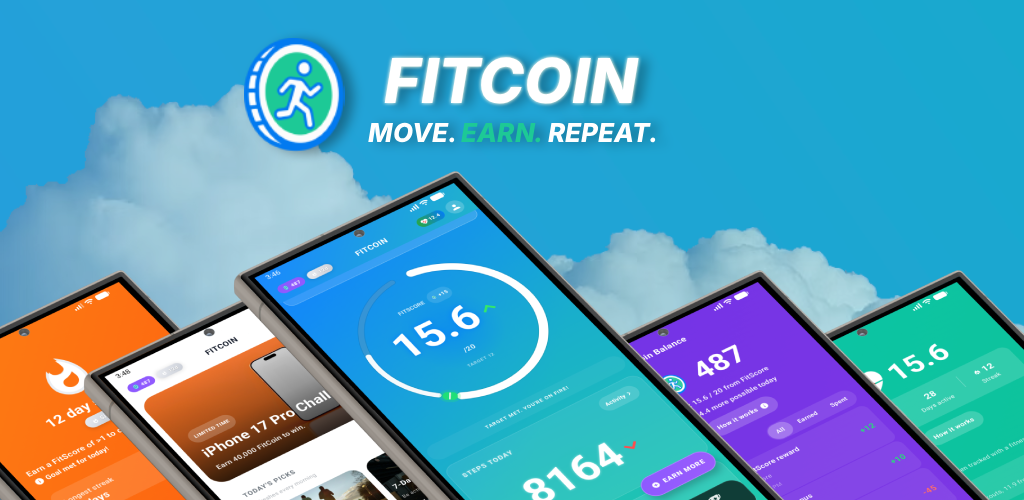
Fitcoin connects to Apple Health and Google Health Connect, so it sees everything your phone and watch already record: steps, structured workouts, heart rate, and active energy. All of it feeds into the FitScore engine, which rewards genuine effort across any activity. Leg day counts. The 5k counts. The boxing class counts. On top of that, Fitcoin adds Sleep, Recovery and Energy insights, coaching, GPS run and cycle tracking, Leagues and challenges.
2. The Rewards: A 50-Day Gift Card vs. Rewards You'll Actually Use
Run the CashWalk numbers and the maths is sobering. At the daily cap of 100 coins, a $5 gift card costing roughly 5,000 coins takes about 50 days of perfect 10,000-step walking. Independent reviewers consistently report $5 every 6 to 8 weeks, around $30 to $40 a year. Worse, long-time users complain that gift card prices keep rising, so the goalposts move while you walk towards them. You can speed things up with lucky boxes, scratchers, and watching extra ads, which tells you a lot about the business model.
Fitcoin skips the slow drip. Instead of saving pennies for weeks, you earn FitCoins that redeem against curated discounts and free items from fitness, nutrition, and wellness brands in the rewards marketplace. These rewards are designed to be worth claiming within days or weeks, not months. If you live an active lifestyle, a meaningful discount on supplements or activewear beats a $5 Starbucks card you waited two months for.
3. Daily Friction: The Treasure Box Problem
CashWalk's earning loop is not passive. Your steps only become Stepcoins when you open the app and tap the treasure box, and each visit typically comes with an ad. The lockscreen widget keeps the app in your face all day for the same reason. Skip a few days and you have walked for free. It's a design that rewards engagement with the app rather than the exercise itself.
Fitcoin syncs in the background through your phone's native health APIs. Your activity is processed whether you open the app or not. We'd love you to check in daily (there are streaks and daily bonuses if you do), but you'll never lose a workout because you didn't tap a box before midnight.
4. Community: Scratchers vs. Real Social Fitness
CashWalk is a solo experience. The extras are casino-style: daily lucky boxes, scratch cards, and raffles that hand out more Stepcoins in exchange for more ad views. There is no real community layer, nobody to train with, and nothing pulling you back besides the coin counter.
Fitcoin's social layer is built around real people, not points. Leagues let you join city run clubs and independent fitness groups, or start your own and invite your mates. You can post workout stories, message friends directly, comment on each other's sessions, and compete on friend leaderboards that reset daily. For most people, a friend seeing you slipping down the leaderboard is worth more motivation than a scratch card.
Recovery, Energy, and coaching, not just coins
Fitcoin also surfaces SleepScore, Recovery and Energy so training decisions are grounded in how recovered you are, then pairs that with daily coaching and Ask Fitcoin. Most walking-reward apps never build this layer. If you want rewards without abandoning modern training context, Fitcoin is the stronger product.
Summary: Which App is Right for You?
Choose CashWalk if:
- Walking is your only form of exercise and you rarely pass 10,000 steps.
- You're happy collecting a small gift card every couple of months.
- You don't mind tapping a treasure box and watching ads to bank your steps.
- You enjoy lucky boxes, scratchers, and lockscreen widgets.
Choose Fitcoin if:
- You want Sleep, Recovery and Energy insights with coaching, not only a coin balance.
- You want every workout to count (gym, runs, cycling, yoga), not just capped steps.
- You'd rather have high-value brand rewards now than a $5 gift card in two months.
- You want automatic background syncing with no treasure box chores or forced ads.
- You want a real fitness community with Leagues, stories, and leaderboards.
Comparing other apps too? Read our Fitcoin vs Sweatcoin, Fitcoin vs WeWard, and Fitcoin vs Macadam breakdowns, or see how the two step apps stack up head to head in CashWalk vs Sweatcoin.