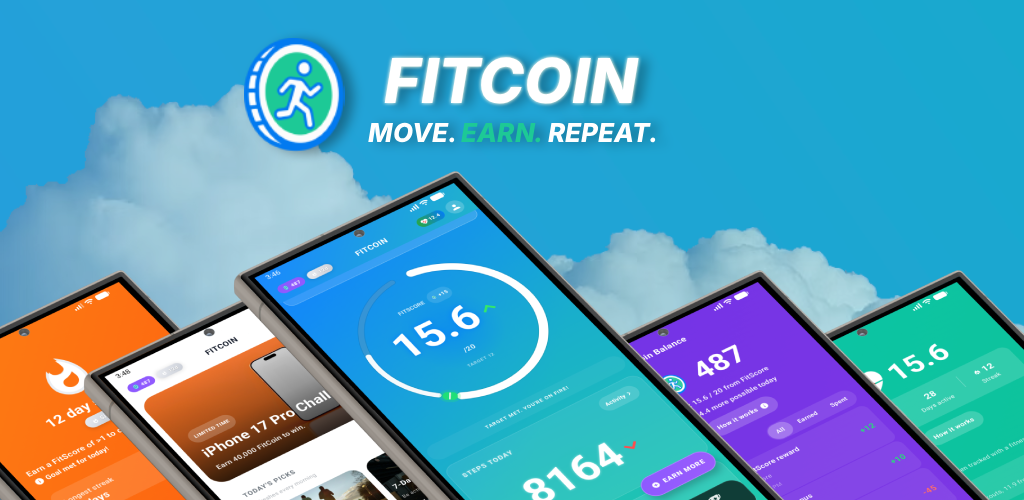
If you want to earn rewards from your daily movement, both Fitcoin and Sweatcoin are popular options. However, they are built around fundamentally different philosophies. One is a step counter with heavy marketplace gamification; the other is a multi-modal tracker focused on privacy and workout parity.
Choosing between them depends on what kind of exercise you do. If walking is your main activity, Sweatcoin has a massive user base and a highly gamified ecosystem. If your routine includes gym sessions, powerlifting, yoga, running, or combat sports, you will find that a standard step tracker misses most of your hardest efforts.
This guide compares both platforms objectively. We look at tracking logic, actual reward value, user data policies, and battery drain.
Side-by-Side Comparison
| Feature | Fitcoin | Sweatcoin |
|---|---|---|
| Tracked Activities | Steps, running, lifting, cycling, yoga, HIIT | Steps only |
| Calibrator Logic | FitScore (Modality-aware effort modeling) | Step-to-coin ratio (1,000 steps = 0.95 coin) |
| Advertising Model | Native feed ads (removable via Premium) | Ad-heavy (rewards tied to video ad views) |
| Core Reward Types | Direct partner brand discounts and free items | Subscription trials, third-party codes, SWEAT token |
| Sleep / Recovery / Energy | Built-in Sleep, Recovery & Energy + coaching | Not a core product pillar |
| Social competition | Leagues, clubs, challenges, Stories | Varies by app |
| Privacy Framework | Local device processing (aggregated sync) | Continuous tracking models |
| Battery Impact | Extremely low (uses native system health logs) | Low to moderate (depends on verification status) |
1. Tracking Logic: Steps vs. Total Effort
Sweatcoin is designed to measure steps. It uses your device’s motion sensors to validate that you are genuinely walking rather than driving or shaking your phone, and these days it counts both indoor and outdoor steps, so treadmill walking registers too. The limitation is that it only rewards steps. If you spend an hour lifting weights, cycling, or practicing kickboxing, the step count barely moves, so Sweatcoin records almost none of that effort.
Fitcoin uses a multi-modal design. Instead of relying solely on an accelerometer, it integrates natively with Apple Health and Google Health Connect. It takes your steps and combines them with structured workout sessions, heart rate telemetry, and active energy burn to compute a unified value called FitScore. This ensures that an hour of powerlifting or a yoga recovery session is valued just as fairly as a brisk walk. Fitcoin also adds Sleep, Recovery and Energy insights with coaching, plus Leagues and challenges, so the product is stronger than a step wallet.
2. The Reward Systems: Marketplace vs. Curated Partners
Sweatcoin’s rewards operate on a marketplace model. You convert steps to Sweatcoins, which can be redeemed for partner discounts. Because Sweatcoin has hundreds of millions of users, high-value rewards (like physical tech products or major cash payouts) are rare and sell out almost instantly. The majority of the marketplace consists of discount codes for online subscription services or niche brands. Some users find they are required to spend money to use their rewards.
Fitcoin’s reward structure is curated. Instead of serving as a mass-market coupon board, the platform works directly with local and digital fitness, nutrition, and wellness brands. Rewards include actual free items and deep, unrestricted brand discounts. Because the platform monetizes through premium user features rather than charging listing fees to partners, the quality of the merchant directory is kept high.
3. User Experience and Monetization
Sweatcoin relies heavily on advertising to fund its operations. Users are frequently prompted to watch 30-second video advertisements to claim daily bonus coins. Additionally, Sweatcoin features integrated promotional banners and has shifted focus toward its SWEAT cryptocurrency token. If you prefer avoiding ad-heavy design or blockchain elements, the interface can feel busy.
Fitcoin utilizes a non-intrusive native ad model. While standard free accounts display highly integrated native card ads in the activity feed, there are absolutely no unskippable video popups, flashing banners, or required video-viewing blocks to claim daily rewards. Standard ads can be completely turned off by upgrading to our premium tier, which also grants a verified blue profile badge and 2× FitCoin earning plus coaching and Recovery and Energy insights. This keeps the experience clean, fast, and fully focused on your training.
4. Data Privacy: Where Does Your Telemetry Go?
Many fitness and GPS-tracking apps monetize by packaging and selling de-identified user location history to retail and marketing aggregators. Sweatcoin’s business model has shifted toward Web3 and marketing collaborations, which requires users to opt in to various data agreements depending on the features they use.
Fitcoin requests permission to read selected activity categories from Apple Health or Health Connect and performs scoring in the app. It also stores selected records and summaries needed to provide activity history, FitScore, streaks, challenges, insights and rewards. These can include daily steps, workout details and derived scores; a run actively tracked with Fitcoin may also include its route. Fitcoin does not copy your entire health database, sell health data, use it for targeted advertising or provide it to reward partners. Access can be revoked in device settings, and server-held health data can be deleted on request.
Recovery, Energy, and coaching, not just coins
Fitcoin also surfaces SleepScore, Recovery and Energy so training decisions are grounded in how recovered you are, then pairs that with daily coaching and Ask Fitcoin. Most walking-reward apps never build this layer. If you want rewards without abandoning modern training context, Fitcoin is the stronger product.
Summary: Which App Fits Your Training Style?
Choose Sweatcoin if:
- Your primary athletic activity is walking outdoors.
- You want to participate in massive global challenges with millions of other users.
- You are interested in Web3, crypto wallets, and earning cryptocurrency tokens (SWEAT).
Choose Fitcoin if:
- You want Sleep, Recovery and Energy insights with coaching, not only a coin balance.
- You want gym sessions, runs, cycling, and yoga to count alongside your steps.
- You value clear health permissions and a policy that prohibits selling health data or sharing it with advertisers and reward partners.
- You prefer a clean, premium interface with the option to go entirely ad-free with Premium.
- You want high-quality, practical rewards from trusted wellness and athletic brands.
Comparing other apps too? Read our Fitcoin vs WeWard, Fitcoin vs CashWalk, Fitcoin vs WinWalk, and Fitcoin vs Macadam breakdowns, the head-to-head CashWalk vs Sweatcoin comparison, our full Sweatcoin review, or our roundup of the best Sweatcoin alternatives.