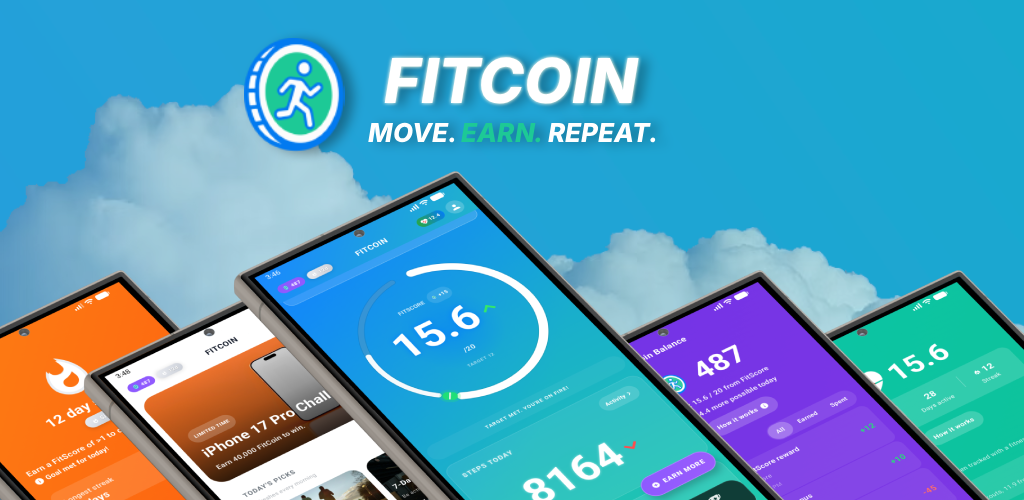
WinWalk and Fitcoin both turn your daily movement into rewards, but they are built for different people. WinWalk is a lightweight step counter that hands out coins for steps; Fitcoin is a multi-modal tracker that rewards full workouts as well as walking, with a curated rewards marketplace behind it.
If you only ever walk, WinWalk is simple and genuinely free. But if your week also includes the gym, a run, a cycle, or a yoga session, a step-only app quietly ignores most of your hardest effort. That is the core trade-off this comparison digs into.
Below we compare both platforms objectively across tracking logic, real reward value, the ad experience, and data privacy.
Side-by-Side Comparison
| Feature | Fitcoin | WinWalk |
|---|---|---|
| Tracked Activities | Steps, running, lifting, cycling, yoga, HIIT | Steps only |
| Calibrator Logic | FitScore (Modality-aware effort modeling) | 1 coin per 100 steps (capped at 10,000 steps/day) |
| Advertising Model | Native feed ads (removable via Premium) | Ad-gated (watch ads to claim and boost coins) |
| Core Reward Types | Direct partner brand discounts and free items | Regional retailer gift cards; some catalogues may include PayPal |
| Daily Earn Cap | Scales with total effort, not just steps | 100 coins/day (~10,000 steps) |
| Sleep / Recovery / Energy | Built-in Sleep, Recovery & Energy + coaching | Not a core product pillar |
| Social competition | Leagues, clubs, challenges, Stories | Varies by app |
| Privacy Framework | Local device processing (aggregated sync) | No GPS; pedometer-based |
| Battery Impact | Extremely low (uses native system health logs) | Very low (no GPS required) |
1. Tracking Logic: Steps vs. Total Effort
WinWalk is a pedometer first and foremost. It reads your phone's step sensor (counting both indoor and outdoor steps, so a treadmill works) and converts those steps into coins at a rate of 1 coin per 100 steps, capped at 100 coins for 10,000 steps a day. It is clean and battery-friendly because it never needs GPS. The limitation is that it only sees steps. An hour of lifting, cycling, or a yoga class barely moves the step count, so almost none of that effort earns anything.
Fitcoin uses a multi-modal design. Rather than relying on a raw step sensor, it integrates natively with Apple Health and Google Health Connect, then combines steps with structured workout sessions, heart rate, and active energy into a single value called FitScore. The result is that a hard gym session or a recovery yoga flow is valued fairly alongside a brisk walk, instead of being invisible.
2. The Reward Systems: Capped Step Grind vs. Curated Partners
WinWalk pays primarily in regional retailer gift cards, with brands such as Amazon, Walmart, Google Play and Tesco appearing in official store listings. Some catalogues may include PayPal. The honest catch is the maths: at a commonly reported rate of 16,000 coins for a $10 card, the 100-coin walking cap is worth 6.25 cents a day. Daily missions, surveys and offer walls can speed that up.
Fitcoin's reward structure is curated rather than a single gift-card catalogue. The platform works directly with fitness, nutrition, and wellness brands, so rewards include genuine free items and meaningful brand discounts. Because Fitcoin monetizes through premium user features rather than charging partners for placement, the quality of the merchant directory stays high.
3. User Experience and Monetization
WinWalk's model depends on advertising. You typically have to watch a video ad to claim or double your daily coins, and many of the bonus-earning paths are offer walls and surveys. It is free and the step tracking is reliable, but the experience is built around ad views, which some people find tedious over time.
Fitcoin uses a non-intrusive native ad model. Free accounts show integrated native card ads in the activity feed, but there are no unskippable video popups or required ad-views to claim your daily rewards. Standard ads can be removed entirely by upgrading to Premium, which also grants a verified blue profile badge and 2× FitCoin earning plus coaching and Recovery and Energy insights. The aim is a clean, fast interface focused on your training rather than on clearing ads.
4. Data Privacy: Where Does Your Telemetry Go?
To its credit, WinWalk avoids GPS entirely and counts steps from the phone's pedometer, so it does not build a map of where you have been. Like most free reward apps, it still relies on advertising and offer-wall partners, so it is worth reviewing what those integrations collect when you complete offers.
Fitcoin reads selected activity categories from Apple Health or Health Connect with permission and performs scoring in the app. It stores selected records and summaries needed for activity history, FitScore, streaks, challenges, insights and rewards, including daily steps, workout details and derived scores. Runs actively tracked with Fitcoin may also store route data. Fitcoin does not copy the entire health database, sell health data, use it for targeted advertising or provide it to reward partners. Users can revoke access and request deletion of server-held health data.
Recovery, Energy, and coaching, not just coins
Fitcoin also surfaces SleepScore, Recovery and Energy so training decisions are grounded in how recovered you are, then pairs that with daily coaching and Ask Fitcoin. Most walking-reward apps never build this layer. If you want rewards without abandoning modern training context, Fitcoin is the stronger product.
Summary: Which App Fits Your Training Style?
Choose WinWalk if:
- Walking is essentially your only activity and you want the simplest possible step-to-gift-card app.
- You do not mind watching a daily ad and completing offers to reach a payout.
- You want simple retailer gift-card rewards and have no interest in workout tracking.
Choose Fitcoin if:
- You want Sleep, Recovery and Energy insights with coaching, not only a coin balance.
- You want gym sessions, runs, cycling, and yoga to count alongside your steps.
- You prefer curated rewards and free items from trusted wellness and athletic brands over a single capped step grind.
- You want a clean interface with no required ad-views, and the option to go fully ad-free with Premium.
- You value strict, on-device data privacy.
Read our full Winwalk review, or compare Fitcoin vs Sweatcoin, Fitcoin vs WeWard, Winwalk vs Sweatcoin, and the best Sweatcoin alternatives.