Apple Watch records HRV, but it does not coach it. Health shows SDNN samples taken in the background. That chart looks like a lie because it is untimed: a reading after coffee is not a reading at 6:12am sitting still. HRV apps earn their keep by forcing a protocol, or by averaging sleep, and then comparing you to you.
This is not a sleep app list. If you want Whoop’s morning colour, see Whoop Recovery explained. This page is which Watch-side apps make HRV usable.
Short verdict: If you will sit still every morning, HRV4Training is still the grown-up choice. If you will not, pick an overnight Recovery app such as Athlytic, Bevel or Fitcoin, and treat Health’s raw SDNN list as background, not a coach. One HRV app is calmer than five arguing over the same night.
Disclosure: Fitcoin is our product. We are not affiliated with Apple, Garmin, Whoop, Bevel, Athlytic, HRV4Training or the other apps named here. Where Fitcoin appears, it is as a Sleep, Recovery and Energy companion that also scores workouts for partner rewards, not a PayPal cash-out app. Scores described below are wellness estimates for general fitness. They are not medical devices and they do not diagnose illness.
What Apple actually stores
Apple Health’s default HRV feature is SDNN from sporadic optical samples. From watchOS 6 and iOS 13 the Watch can also write RR intervals from a Mindfulness Breathe session, which lets apps compute rMSSD, the metric most sports-science HRV tools prefer for short recordings. Marco Altini has said for years that the Watch is accurate when you trigger a still morning measurement, and messy when you trust random night pings.
If you only open Health, you will see a cloud of milliseconds. That is not a training system.
Two schools, pick one
| School | How you measure | Apps |
|---|---|---|
| Morning snapshot | Same time, seated, camera, Polar strap, or Watch Breathe, then rMSSD vs your normal range | HRV4Training, Elite HRV |
| Overnight blend | Sleeping HRV and resting heart rate vs a multi-week baseline, baked into Recovery | Athlytic, Bevel, Fitcoin, Whoop (strap) |
Mixing schools is how people think their Watch is broken. Tuesday’s HRV4Training camera reading will not equal Tuesday’s Athlytic Recovery percentage. Both can be internally consistent.
The apps worth installing
HRV4Training uses camera PPG, Bluetooth straps, or Watch Breathe into Health to get rMSSD. It has tags for alcohol, illness and training. For the longer review, see HRV4Training review. It is the best fit if you like homework.
Athlytic turns overnight HRV and resting heart rate versus a 60-day baseline into Recovery 0–100%, then a 0–10 Exertion target. The privacy pitch is on-device processing. It is the best fit if you want Whoop-like colours without a strap. See the Athlytic review, Bevel vs Athlytic, or the shopping list in apps like Bevel.
Bevel defaults to RMSSD and can switch to Apple’s SDNN. Recovery uses HRV, resting heart rate, respiratory rate, SpO₂ and wrist temperature. For the deep dive, see Bevel scores explained.
Elite HRV is built around morning readings, a CorSense finger sensor and chest straps. It is weaker as a just-wear-the-Watch-and-forget-it app, and fine if you already own the hardware.
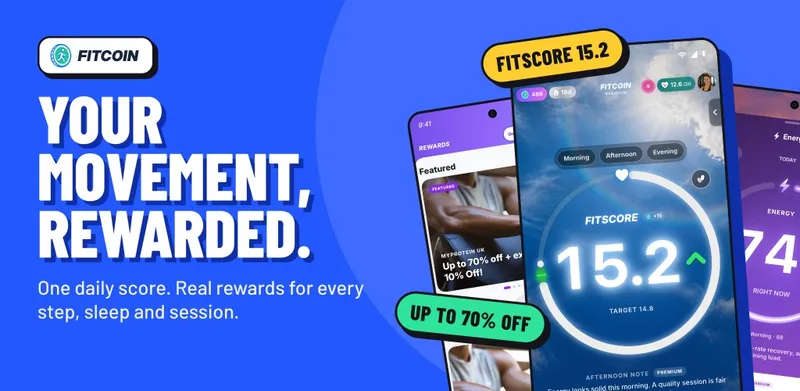
Fitcoin Recovery makes HRV the largest pillar, about 36% when present, then resting heart rate, SleepScore, sleep duration consistency, training load and a small systemic slice from overnight breathing rate, wrist temperature and SpO₂, all versus personal baselines rather than population cut-offs. Missing pillars get re-weighted rather than faked. iOS uses Apple’s SDNN against your baseline; Android uses Health Connect RMSSD the same way, so the two units stay on their own scales.
When to ignore the Health app chart
- After coffee, a commute or a rowing interval.
- When one night shows three samples and the next shows twenty.
- When you compare your 45 ms to a forum screenshot of 120 ms. Age, sex, method and device differ.
Who should bother
Yes if you will measure the same way for 30 days, you already wear the Watch in bed, and you want Recovery to move when HRV drops, not just when you slept six hours.
Skip it if you wanted a magic increase-HRV breathing game as the whole product, or you switch Watch, ring and strap every other day.
SDNN versus rMSSD, in one paragraph
SDNN is the standard deviation of NN intervals over the recording. Apple likes it for background samples. rMSSD is the root mean square of successive differences, more sensitive to beat-to-beat vagal change, which is why morning HRV tools and Whoop-style overnight tools prefer it. Bevel defaults to RMSSD and will let you switch to Apple’s SDNN. Fitcoin scores each platform against your personal baseline rather than claiming SDNN milliseconds equal RMSSD milliseconds.
If an app does not say which feature it uses, assume you cannot compare it to a screenshot from a different app.
A boring seven-day test
Pick one app. Measure or wear the same way for seven mornings. Tag one night that includes alcohol or a very late bedtime. If the next day’s HRV or Recovery does not move, the app may not have enough sleep HRV, or it is not doing the job. If it moves and you still smash intervals, you wanted the graph more than the advice.
Morning-protocol people should do this in HRV4Training. Overnight people should do it in Athlytic, Bevel or Fitcoin, not all three.
Frequently asked questions
Does Apple Watch measure HRV?
Yes. Apple Watch writes heart-rate variability to Health, typically as SDNN from background samples. Those samples are not a guided morning reading. Apps either interpret the overnight scatter, or they ask you to take a timed Breathe / Mindfulness session so they can compute rMSSD from RR intervals.
What is the best HRV app for Apple Watch?
Choose HRV4Training if you will do a controlled morning measurement. Choose Athlytic or Bevel if you want overnight Watch data turned into Recovery without a ritual. Elite HRV fits if you own a chest strap or finger sensor. Fitcoin Recovery fits if you want HRV as one pillar next to sleep and load, plus workout rewards.
Why doesn’t my HRV match between apps?
SDNN is not rMSSD, overnight averages are not a 60-second morning reading, and Whoop, Oura and Apple are not on the same clock. Compare trends inside one app, never the integers across two.
Is a high HRV always better?
Higher than your own baseline usually means more parasympathetic activity. Extreme spikes can also be noise, illness or a bad sensor day. Apps should talk in ‘versus your normal’, not a universal 80 ms target.
Can I train HRV with breathing apps?
Biofeedback apps exist, but they are a different job from a morning readiness reading. A five-minute breathe session should not be mixed into yesterday’s overnight average.
Method and sources: Written 13 August 2026 from Apple’s Sleep Score user guide (watchOS 26 / iOS 26.2 bands), Bevel help articles on Key Terms and Common Questions, Whoop’s published Recovery explainer (green / yellow / red bands), Athlytic’s public Recovery and Exertion documentation, Marco Altini’s HRV4Training guidance on morning protocols versus overnight Watch samples, Garmin’s Body Battery description, and Fitcoin’s on-device SleepScore, Recovery, Energy and Immune Shield calculators. Third-party weights, prices and Watch compatibility change. Confirm the live app. Fitcoin inclusion is ownership-disclosed. Wellness estimates only; not medical advice.
Related reading: HRV4Training review, readiness on an older Apple Watch, Whoop Recovery explained, Apple Watch Series 12 Readiness score., What is a good HRV
About the author: Harris Khan is the co-founder of Fitcoin. He studied at Loughborough University and has more than 15 years of personal experience across strength training, bodybuilding, Muay Thai and general fitness.